
The Bangkok Most Visitors Never See: A Morning on the Thonburi Canals
Most visitors cross the Chao Phraya River only once.
They take the ferry to Wat Arun, spend an hour exploring the temple, take photographs of its porcelain-covered spire, and then head back across the river. For many people, that is the end of their visit to Bangkok's western bank.
I always encourage guests to keep going.
A few minutes beyond Wat Arun, Bangkok begins to change. The traffic fades, the buildings sit lower to the ground, and the river branches into a network of canals that once formed the city's main streets. Within minutes, it feels as though you've left the capital behind, even though you're still in the middle of it.
This is Thonburi.
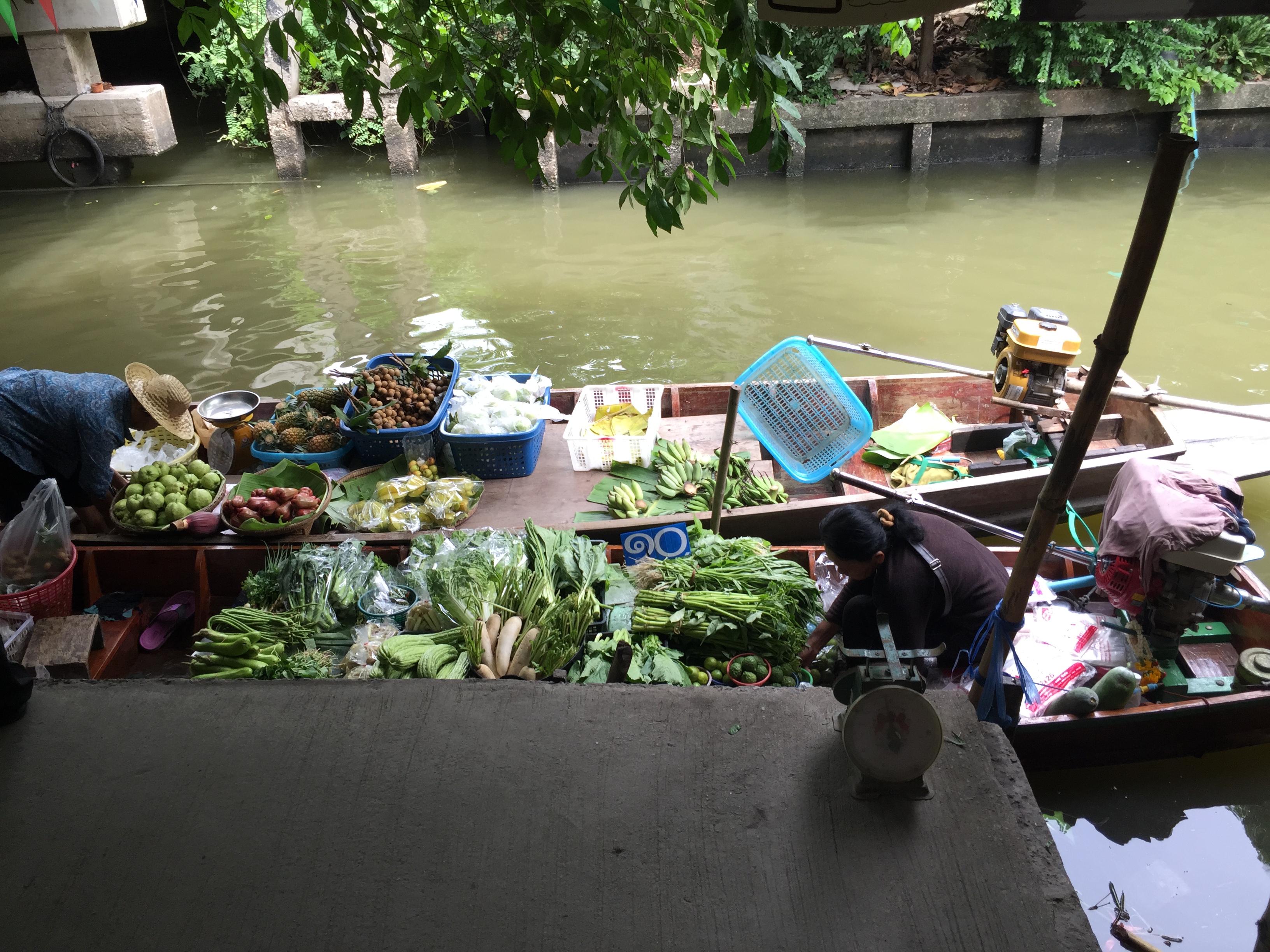
From 1767 to 1782, Thonburi was the capital of Thailand — the seat of King Taksin, who reunified the country after the destruction of Ayutthaya by Burmese forces. When Rama I moved the capital across the river in 1782 and began building what is now the historic center of Bangkok, Thonburi remained. It became the western bank, and while modern Bangkok grew around roads and high-rise buildings, many of these canals remained part of everyday life.
That is what makes the journey worthwhile.
The best way to experience Thonburi is from the water. A longtail boat is hardly luxurious. The engine is loud, conversation occasionally pauses as it accelerates through the canals, and you quickly discover why everyone recommends a hat on sunny mornings. Yet it is exactly the right way to travel here because the canals were never designed to be viewed from a road.
The tour departs in the morning from a landing near the Tha Tien pier. As the boat leaves the Chao Phraya behind, everyday life gradually comes into view. Wooden houses stand on stilts above the water. Families sit on shaded verandas eating breakfast. A neighbor calls across the canal while another tends a row of potted plants balanced along a narrow wooden walkway. Small temples appear unexpectedly around a bend, and monks move quietly between buildings that many visitors never realize exist.
There are moments when the boat passes only a few meters from someone's front steps. You are not watching a performance prepared for tourists. You are passing through neighborhoods where people happen to live.
That difference is one of the reasons I enjoy bringing guests here — and it's also why I'm careful about which canal tour we take. The tours marketed to visitors near the Grand Palace often follow a different model: they stop at a "floating market" staged for tourists, push you toward orchid shops that pay a commission, and follow a route built around those commercial stops rather than what's genuinely worth seeing. The tour I use does none of that. A private boat, a guide who actually knows the canals, and a route built to show guests what's there, not what generates revenue for someone else along the way.

There is history here, of course — the dates, the kings, the canals as the city's original transportation network. Knowing that history adds another layer to the experience, but it isn't what stays with most people.
What they remember is the quiet.
Only a short distance away, Sukhumvit Road is already filling with traffic. Around the Grand Hyatt Erawan, office workers are arriving, cafés are opening, and one of Asia's busiest cities is beginning another day.
On the canals, the pace is completely different.
That contrast is why I include the Thonburi tour in every Bangkok itinerary.
The Grand Hyatt, rooftop restaurants, and New Year's Eve celebrations show one side of Bangkok — a modern, international city that never seems to slow down. Thonburi reminds guests that another Bangkok still exists alongside it, one shaped by rivers rather than roads and by neighborhoods that have evolved gradually instead of all at once.
By the time we return to the main river, most guests are surprised by how close it all was. In less than half a day, they've traveled only a few kilometers, yet it feels as though they've crossed into a different city.
For me, that's one of Bangkok's greatest strengths. It is not one city but several, layered on top of one another, and the canals of Thonburi remain one of the best places to see those layers for yourself.
Questions about the Thonburi visit or the extended program — reach us any time.
bookings@cc-asia.com