The Erawan Shrine: Bangkok's Most Sacred Corner — and What It Means to Stand There on New Year's Eve
There's a moment on New Year's Eve at the Grand Hyatt Erawan that most people never notice, even when they're staying right there in the hotel.
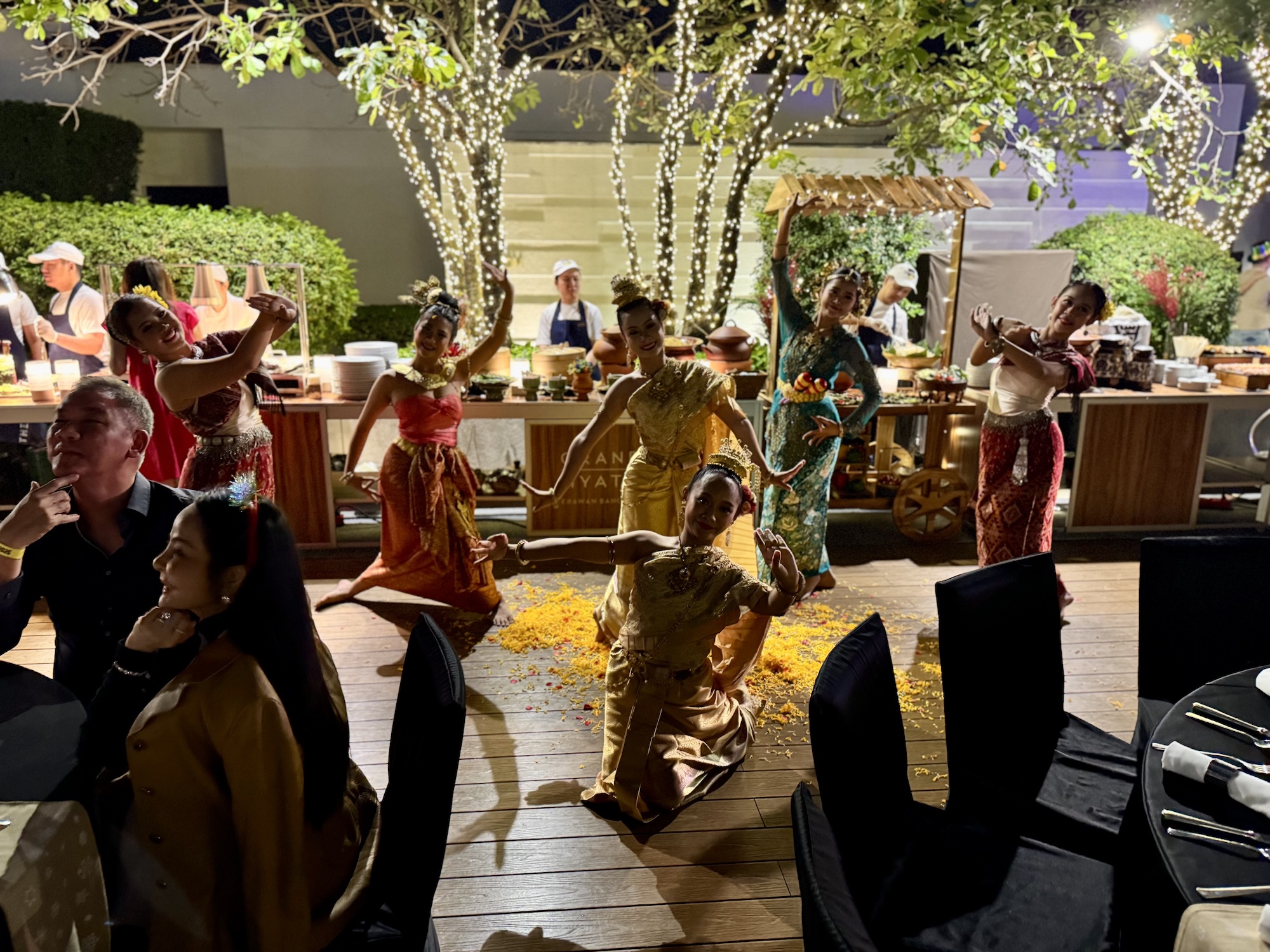
Just before midnight, step out of the pool area and walk to the property's edge, facing Ratchaprasong. The Erawan Shrine is right there. Lit, garlanded, surrounded by people who haven't come to celebrate the new year — they've come to pray. Flowers, incense, and traditional dancers performing as offerings for prayers already answered. Ten meters in the other direction, a DJ is counting down to midnight, and the sky is about to fill with fireworks.
Two Bangkoks, side by side. After thirty years of coming to this city, it's still the thing that stops me.

How the shrine came to be
The shrine wasn't planned as a landmark. It was built in 1956, during construction of the original Erawan Hotel on this same corner — a government-owned property and one of Bangkok's first international hotels. Workers kept getting hurt, and the project fell badly behind.
Brahmin priests were brought in. Their conclusion: construction had begun on an inauspicious date, and the spirits of the land hadn't been properly appeased. The fix was a spirit house on the northeast corner of the property, with a statue of Phra Phrom — the Thai representation of Brahma.
They built it. The accidents stopped, and the hotel was finished.
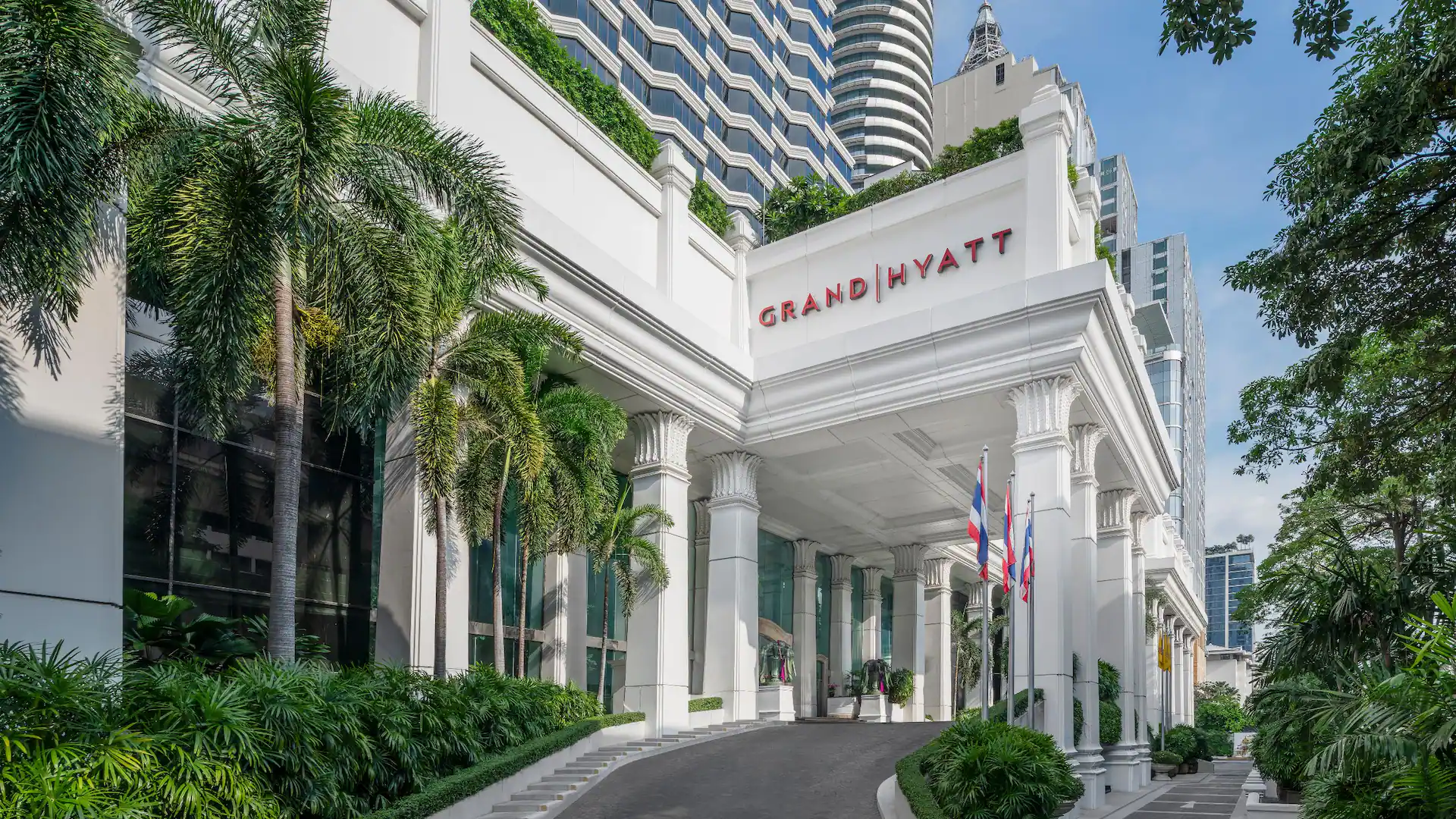
Word spread quickly that prayers offered here were answered. Years later, when the original hotel came down and the Grand Hyatt went up in its place, the shrine wasn't up for discussion. It stayed. The hotel was built around it.
What you see there today
This is a working shrine, not a museum piece. It runs from early morning until late at night. Thai families. Office workers on lunch breaks. Taxi drivers who pull over just long enough to press their palms together before driving on. Tourists standing at a polite distance, photographing something they don't quite understand.
The offerings are specific — wooden elephants, jasmine and marigold garlands, incense, small figurines. Dancers, paid for by people whose prayers were answered, perform beside the shrine while traffic crawls past at one of Bangkok's busiest intersections.
None of it feels staged for visitors. The shrine sits at the corner of Ratchadamri and Ploenchit, surrounded by luxury hotels, a sky train station, and the entrances to Central World and the Grand Hyatt — the most commercial, modern corner of the city. And the prayers keep coming anyway.

The 2006 bombing and what followed
In August 2006, a bomb exploded at the Erawan Shrine. Twenty people were killed, and the statue of Phra Phrom was destroyed.
A replacement statue went up within weeks. Worshippers returned almost immediately. Before long, the crowds were as large as they'd ever been.
I bring this up not to dwell on it, but because how quickly it came back tells you what the shrine actually means here. This isn't a tourist stop that can sit closed for a season. The city needed it back.
Why it matters on New Year's Eve
Stay at the Grand Hyatt Erawan on New Year's Eve, and the shrine is part of your night whether you go looking for it or not. You can see it from the hotel entrance. On December 31st, it's lit brighter than usual, and more people come.
I always slip away for a few minutes during the evening to walk over. Not to pray — that's not mine to do — just to watch. The contrast between the shrine and the hotel behind it. A city that holds the sacred and the celebratory at the same corner, at the same moment, without either one looking out of place.
Questions about the shrine, or about Bangkok — reach us any time.
bookings@cc-asia.com